
Shopify Themes: How to Choose the Right One for Growth

Shopify is a powerful ecommerce platform that helps businesses of all sizes build, manage, and scale online stores. Setting up a store is simple, but real success depends on many moving parts — standout products, smart pricing, and effective marketing. One element quietly ties all of this together and multiplies its impact: the Shopify theme.
A theme does more than shape the look of your store. It influences how customers browse your products, how easily they trust your brand, and how smoothly they move toward checkout. A strong theme complements your marketing and product strategy, making every effort more effective.
Choosing the right theme is about creating a foundation that supports growth. When paired with great products and smart marketing, it turns your store into a seamless experience that encourages purchases and repeat visits.
This guide shows how to pick a Shopify theme that enhances your store’s performance, strengthens user experience, and sets the stage for long-term growth.
The Industry Fit Problem Nobody Talks About
Many Shopify brands pick themes just because they look good. The truth is, most
themes are built for a “one-size-fits-all” store — and your ecommerce store is anything but generic. Whether you sell sarees, jewelry, electronics, menswear, or books, your theme needs to match how your customers shop, compare, and buy.
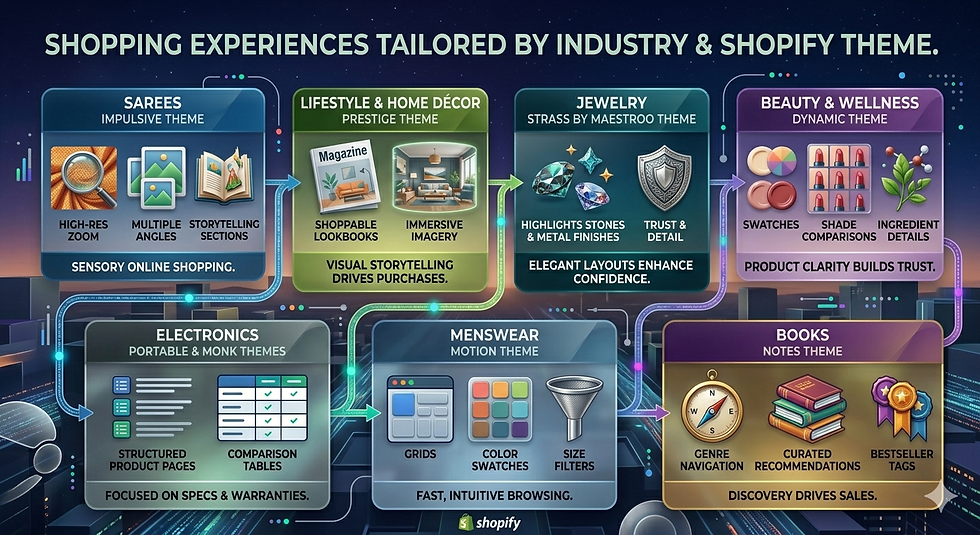
Sarees: Online shopping is sensory. Shopify’s Impulsive theme provides high-res zoom, multiple angles, and storytelling sections, letting customers experience fabrics and drapes before they buy.
Lifestyle & Home Décor: Visual storytelling drives purchases. Shopify’s Prestige theme offers shoppable lookbooks and immersive imagery, helping shoppers imagine products in their own space and boosting engagement.
Jewelry: Buyers value trust and detail. Shopify’s Strass by Maestroo theme highlights stones and metal finishes with elegant, product-focused layouts, enhancing confidence and conversions.
Beauty & Wellness: Product clarity builds trust. Shopify’s Dynamic theme provides swatches, shade comparisons, ingredient details, and flexible layouts with interactive storytelling for an engaging shopping experience.
Electronics: Buyers research specs and warranties. Shopify themes Portable and Monk offer structured product pages, comparison tables, and organized layouts to reduce bounce and improve decision-making.
Menswear: Fast, intuitive navigation is key. Shopify’s Motion theme delivers grids, color swatches, size filters, and quick view options for smooth browsing and efficient purchases.
Books: Discovery drives sales. Shopify’s Notes theme offers genre navigation, curated recommendations, and bestseller tags, making it easy for readers to find their next book and increasing dwell time.
Even on the same Shopify platform, different industries have completely different requirements. One-size-fits-all Shopify themes rarely deli ver optimal results. Choosing a theme that aligns with your audience’s shopping behavior improves user experience, conversion rates, and SEO performance, while creating a scalable foundation for growth.
Mobile Is the Whole Game
In India, most ecommerce traffic comes from mobile, and Shopify themes are built to adapt seamlessly to any device. Responsive design is only the starting point — true mobile-first optimization turns casual visitors into buyers.
A mobile-optimized store means thumb-friendly navigation, sticky cart buttons that follow the customer as they scroll, fast-loading high-quality images, and a checkout flow that works flawlessly on any screen. It is not just about “it works on a phone”; it is about making the shopping experience effortless, intuitive, and friction-free.
Regularly testing your Shopify store on mid-range phones over average networks is critical. This ensures product pages, navigation menus, and checkout remain smooth, keeping bounce rates low and conversions high. A seamless mobile experience is central to ecommerce growth, customer satisfaction, and long-term SEO performance.
Free vs Paid Shopify Themes: The Honest Breakdown
Free themes from Shopify’s own library — Dawn, Sense, Refresh, and the latest Horizon — are genuinely well-built. They feature clean code, fast loading, and mobile-optimized layouts. For early-stage stores with a smaller catalogue, a free Shopify 2.0 theme handled correctly can outperform a paid theme handled carelessly every time.
Shopify 2.0 themes come with flexible sections and blocks, letting you customize homepages, product pages, and collection pages without touching code. Free themes offer standard sections: hero banners, featured products, basic collection grids, and simple text or image blocks. Paid themes expand on this with advanced sections like sliders, lookbooks, tabs, FAQs, product comparison tables, sticky carts, and custom filtering — giving your store the ability to scale visually and functionally.
Paid themes earn their price when your catalogue is large or complex, when advanced filtering is essential, or when your brand positioning demands a premium layout that free themes cannot provide. Both free and paid Shopify 2.0 themes benefit from app integration and flexible sections, but the right choice depends on your store size, complexity, and growth strategy.
Built-in Features VS App Dependency
The mistake isn't choosing free over paid. It's paying for a premium theme before you've validated your market, and then watching it sit underutilized while the monthly bills add up.
Many brands try to patch missing features by installing multiple apps. While this can work temporarily, it often slows down the store and adds complexity that distracts from growth.
A smarter approach is to choose a theme that comes equipped with essential tools out of the box — features that directly enhance product meta visibility. For example, mega menus make navigation effortless, while well-structured product pages ensure meta information such as SKU, size, color, material, and availability is clear at a glance. Quick view options give a peek at items without leaving the page, and built-in promotional banners highlight offers without extra setup.
When these features are already part of the theme, product meta details are presented consistently, the store runs faster, and your team can focus on delivering a seamless shopping experience that drives sales and improves SEO.
Choose a Theme Like Infrastructure
Your Shopify theme is the foundation for everything — ads, SEO, content, and customer experience. The wrong theme slows growth. The right one amplifies every effort.
Purplechalk can help you pick the right theme and rebuild your store to match how your customers actually shop. We have worked with dozens of Shopify brands, turning foundations that were holding back growth into smooth, high-converting experiences. Whether you need a full rebuild or guidance on choosing the perfect theme for your business, we make sure your store is set up for long-term success.
FAQ
How do I choose the best Shopify theme for my store?
Choose a theme based on your niche, product type, and required features. Focus on speed, mobile responsiveness, and customization options.
Are free Shopify themes good for growth?
Yes, free themes can work well for beginners with basic needs. However, premium themes offer more features and flexibility for scaling.
What features should I look for in a Shopify theme?
Look for fast loading speed, mobile optimization, SEO-friendly structure, and easy customization. These features directly impact user experience and sales.
Can I change my Shopify theme later?
Yes, you can switch themes anytime without losing products. But design and layout settings may need to be adjusted again.
Should I choose a niche-specific Shopify theme?
Niche-specific themes are helpful as they are designed for certain products. They often include relevant layouts and built-in features.


Коли є час просто погортати різні теми, люблю починати з Lifehata, бо там легко перейти від стосунків до привітань чи інших життєвих питань. Потім іноді відкриваю Infosaray заради здоров’я, харчування та пізнавальних матеріалів. На Infovayb дивлюся техніку й сучасні сервіси, на Vrazhay — догляд і самопочуття, на Poradka — практичні поради, а на Sutovychok — побутові теми.
Entender como o link na bio funciona na prática é essencial para quem quer aumentar o alcance nas redes. A explicação da BioLinku sobre o tema mostra de forma objetiva como esse recurso pode ser usado para direcionar tráfego, fortalecer a presença de criadores e melhorar resultados de conversão. Um bom ponto de partida para revisar a própria estratégia.
dự đoán xsmb mình thấy trên mấy group nhắc suốt nên cũng tò mò vào coi thử giao diện ra sao. Mình không phải dân soi cầu chuyên nghiệp, chủ yếu xem cách họ trình bày có dễ theo dõi không thôi. Vào trang là thấy bài “Soi cầu MB ngày 16 8 2026” để khá nổi, nên khỏi phải mò lâu. Kéo xuống chút thì các phần nội dung được chia theo từng khối, nhìn lướt là biết đang nói về dự đoán cho ngày nào, không bị dính chữ thành một mảng dài. Mình thích nhất là mấy đoạn thống kê nhận định họ tách riêng, đọc nhanh mà không rối mắt. Nói chung bố cục kiểu “mỗi…
Mình mua vé số kiểu cho vui thôi, coi như giải trí nên cũng không đặt nặng chuyện trúng hay không. Trước đây nghe bạn bè bàn về mấy “cầu” với quy luật này nọ, mình cũng thử để ý một thời gian và thấy đôi lúc có vài dạng lặp lại khiến mình tò mò. Khi đọc các nhận định, mình hay ghi lại vài ý chính rồi chờ kết quả để đối chiếu, xem có phải mình đang tự thuyết phục bản thân không. https://soicauxsmb.io/du-doan-xsmb-minh-ngoc.html Thỉnh thoảng khớp được vài con thì vui nhẹ, nhưng cũng có bữa lệch hoàn toàn nên mình luôn nhắc mình đừng tin quá. Nói chung, mấy dự đoán xsmb chỉ giúp mình…
mình có lần lướt đọc mấy trao đổi trên mạng شيخ روحاني thì thấy nhắc nên cũng tò mò mở ra xem thử cho biết. mình không tìm hiểu sâu chỉ xem qua trong thời gian ngắn để quan sát bố cục cách sắp xếp جلب الحبيب các mục và trình bày nội جلب الحبيب dung tổng thể. cảm giác là các phần được trình bày khá gọn, các hurentest berlin mục rõ ràng nên đọc lướt cũng không bị rối với mình như berlinintim vậy là đủ để nắm tin cơ bản rồi. جلب الحبيب